
Wednesday, November 9, 2011


Wednesday, July 20, 2011
Wall Street Regulation in the Digital Age
A new type of regulation is gathering steam on Wall St., and it’s bound to alarm the keyboard-happy traders who now dominate the securities industry. Regulators are asking Wall Street firms to hand over the proprietary algorithms they use to make speedy, high-volume deals each day.
The Securities and Exchange Commission wants the information as part of its eternal quest to ensure compliance, it says. And the Financial Industry Regulatory Authority (FINRA), perhaps trying to outdo its sometimes-competitor, is pursuing its own investigation of what it calls “suspicious market activity.”
But these computer codes depend on hundreds of hours of research and calculations, and are considered a “special sauce” that firms aren’t eager to share, as this Reuters report explains.
By the time the market experienced the flash crash of May 6, 2010, wherein runaway computer trades drove the Dow Jones Industrial Average down by 1,000 points in just minutes, some investors had already begun to worry about the consequences of high-frequency trading. High-frequency trading is a type of algorithmic trading often used to exploit price differentials in global markets. By buying and selling huge volumes at lightning speeds, traders turn small differentials into huge profits.
Observe the crash here:
The first investigations into these trades began soon after that startling wake-up call, but so far regulators only dipped a proverbial toe into the sea of high frequency trading. Now they’re diving in.
Concerns over high frequency trading aren’t limited to potential repeats of the flash crash. In fact, that’s already been somewhat guarded against. Instead, some think that high-frequency trading, even when done right, is bad for the market.
Computers can’t consider nuances like recent changes in company management or complex historic trends, and so any algorithmic trading allocates capital less wisely than a human trader would, opponents say. That in turn does an injustice to the market by wasting capital on investments that are less than ideal. A survey by Liquidnet found that investors are “clearly concerned that their long-term investment styles are at odds with the speculative, nano-second profit taking approach utilized by high frequency traders."
And the proliferation of warp-speed, automated trading certainly handicaps independent investors. As this piece on 24/7 Wall St. notes, the strategy “excludes Joe Public, leaving the typical investor at a huge disadvantage against the professionals.”
Thursday, October 28, 2010
The Recession is Over! ...for Billionaires
CNBC reports that the newly-released Porsche 911 GT2 RS (that's a cool $329,000, for those of you who are in the market) sold out within two months of its debut.
Without getting into all the numbers, I'll just say that this car is really, really fast and really, really pretty. Apparently people like that. For a little tasty check out this video with intense German narration.
So during a (non) recovery, why were so many people wiling to spring for a $329,000 toy?
Well, the same article quotes a report by economist Neil Dutta, which found that luxury spending is up for several reasons, one of them being that "post mid-terms, if Republicans don’t capture the Senate, taxes for the wealthy are likely to go higher for investments, estates and income."
“We see several reasons for optimism about spending on luxury items,” wrote Dutta, saying that higher savings, less exposure to housing, rising equity investments, and a tighter job market for the college-educated create “a secular story that bodes well for those catering to upper income earners.”
In related news, millionaire optimism hit a 3-year high this month.
At least someone's feeling good.
Without getting into all the numbers, I'll just say that this car is really, really fast and really, really pretty. Apparently people like that. For a little tasty check out this video with intense German narration.
So during a (non) recovery, why were so many people wiling to spring for a $329,000 toy?
Well, the same article quotes a report by economist Neil Dutta, which found that luxury spending is up for several reasons, one of them being that "post mid-terms, if Republicans don’t capture the Senate, taxes for the wealthy are likely to go higher for investments, estates and income."
“We see several reasons for optimism about spending on luxury items,” wrote Dutta, saying that higher savings, less exposure to housing, rising equity investments, and a tighter job market for the college-educated create “a secular story that bodes well for those catering to upper income earners.”
In related news, millionaire optimism hit a 3-year high this month.
At least someone's feeling good.
Tuesday, October 5, 2010
Personal Income Fell For New Yorkers
From The Economic Times:
The recession put a 3.1 per cent dent in the personal incomes of New York state residents, who endured their first full-year decline in more than 70 years, according to a report released on Tuesday. Paychecks or net earnings tumbled 5.4 per cent, while dividends, interest and rent slid 8.4 per cent, to a grand total of nearly $908 billion, the state comptroller's report said.
Not only did New Yorkers' personal incomes fall "almost twice" as much as they did in the nation as a whole, but they have yet to recover to pre-recession levels, Comptroller Thomas DiNapoli said. The drop occurred even though the job-destroying recession was milder in New York than in the rest of the country. One reason for the hit to New Yorker's pocketbooks is Wall Street's dominance among the state's employers; pay and job security are often highly volatile in the securities industry.
The recession put a 3.1 per cent dent in the personal incomes of New York state residents, who endured their first full-year decline in more than 70 years, according to a report released on Tuesday. Paychecks or net earnings tumbled 5.4 per cent, while dividends, interest and rent slid 8.4 per cent, to a grand total of nearly $908 billion, the state comptroller's report said.
Not only did New Yorkers' personal incomes fall "almost twice" as much as they did in the nation as a whole, but they have yet to recover to pre-recession levels, Comptroller Thomas DiNapoli said. The drop occurred even though the job-destroying recession was milder in New York than in the rest of the country. One reason for the hit to New Yorker's pocketbooks is Wall Street's dominance among the state's employers; pay and job security are often highly volatile in the securities industry.
Wednesday, September 22, 2010
Scammer Flips Free Kitties For Profit
The next time you're worried about making rent, do try to resist the temptation to turn to Craigslist in search of something furry to sell. Because you might get caught.
Recently a Park Slope battle was born when one woman found out that the cats she'd given away were being sold by a serial "cat flipper."
The best part is the "flipper"s response to being confronted:
"I just decide to find them homes...You still gave them away to me for free, no contract, once in my hand their [sic] initially mines. That means if I wanted to give them to my nieces, stranger walking the street, dad, or grandmother thats initially on me. ... I'm not gonna sit here going back and fourth with you, then get excited and have an asthma attack."
...Fair enough?
Tuesday, September 21, 2010
Your Guide To The (New) Maze of Credit Card Reforms
My latest on Brokelyn.com:
Credit-card regulation may have taken effect earlier this year, but don’t rest on your free-spending laurels just yet. The card companies are still out to get you. That’s kinda their job. Although the new rules outlaw many decades-old predatory practices, the companies have quickly come up with sneaky ways around the rules and new strategies for fleecing their customers, thus continuing to earn huge profits and the hatred of all people. We thought it’d be helpful to spell out exactly what card companies can’t do and what we all need to watch out for.Here’s what’s forbidden under the new law, the CARD Act. It’s important that you know this so that you can spot potential violations by your card issuer (such violations have already been recorded by the Consumer Federation of America):
Your credit card company cannot:
-Increase your interest rate on an existing balance, or within the first year an account is open.
-Charge you a fee for inactivity.
-Charge you a fee for making transactions that exceed your credit limit or overdraw your bank account. Instead, your purchase will simply be denied (unless you “opt in” to overdraft “protection”—aka fees. This makes overdraft protection the exception, where it had been the rule).
-Maximize your interest charges by using “two-cycle” billing (imposing interest charges on balances in a past billing cycle or bundling payments).
-Charge you a late fee without warning.
-Raise your interest rates or other fees without first giving you 45 days’ notice and the option instead to cancel the card.
-Charge you annual fees that exceed 25 percent of your credit limit (excluding penalty fees).
-Allow a minor to open an account without a co-signer or proof of means.
-For a given late fee, charge you more than $25 or the amount of your minimum payment due. The one exception allows for higher penalties if the cardholder has multiple late payments within the past six months.
Now, the loopholes—or, what to look out for:
Professional cards
These are part corporate card, part consumer card and fully exempt from the new law. Companies have sent out an unprecedented number of these cards since the law passed.
Rebate cards
These are also exempt from the new regulation.
Annual fees
Even though annual fees can’t total more than 25 percent of your credit limit, 25 percent can be a lot. And many companies are making sure to get as close as possible to that 25 percent, even if their previous annual fees were low. (The 25 percent cap on annual fees does not apply to penalty fees, such as late payment fees, or to “processing” fees, which are charged upon initiating the account.)
Balance-transfer fees and minimum finance charges
These apply when you transfer your credit-card balance to get a lower interest rate; and to balances that remain on the card month-to-month (respectively).
Unfair calendar-driven late fees
That nearly criminal late fee if the due date of your payment falls a holiday or weekend, when the bank doesn’t process payments.
For more detail, and some history behind the legislation, see the suggestions here, here and here.
A credit-card-reform survival guide
9.2.10
Credit-card regulation may have taken effect earlier this year, but don’t rest on your free-spending laurels just yet. The card companies are still out to get you. That’s kinda their job. Although the new rules outlaw many decades-old predatory practices, the companies have quickly come up with sneaky ways around the rules and new strategies for fleecing their customers, thus continuing to earn huge profits and the hatred of all people. We thought it’d be helpful to spell out exactly what card companies can’t do and what we all need to watch out for.Here’s what’s forbidden under the new law, the CARD Act. It’s important that you know this so that you can spot potential violations by your card issuer (such violations have already been recorded by the Consumer Federation of America):
Your credit card company cannot:
-Increase your interest rate on an existing balance, or within the first year an account is open.
-Charge you a fee for inactivity.
-Charge you a fee for making transactions that exceed your credit limit or overdraw your bank account. Instead, your purchase will simply be denied (unless you “opt in” to overdraft “protection”—aka fees. This makes overdraft protection the exception, where it had been the rule).
-Maximize your interest charges by using “two-cycle” billing (imposing interest charges on balances in a past billing cycle or bundling payments).
-Charge you a late fee without warning.
-Raise your interest rates or other fees without first giving you 45 days’ notice and the option instead to cancel the card.
-Charge you annual fees that exceed 25 percent of your credit limit (excluding penalty fees).
-Allow a minor to open an account without a co-signer or proof of means.
-For a given late fee, charge you more than $25 or the amount of your minimum payment due. The one exception allows for higher penalties if the cardholder has multiple late payments within the past six months.
Now, the loopholes—or, what to look out for:
Professional cards
These are part corporate card, part consumer card and fully exempt from the new law. Companies have sent out an unprecedented number of these cards since the law passed.
Rebate cards
These are also exempt from the new regulation.
Annual fees
Even though annual fees can’t total more than 25 percent of your credit limit, 25 percent can be a lot. And many companies are making sure to get as close as possible to that 25 percent, even if their previous annual fees were low. (The 25 percent cap on annual fees does not apply to penalty fees, such as late payment fees, or to “processing” fees, which are charged upon initiating the account.)
Balance-transfer fees and minimum finance charges
These apply when you transfer your credit-card balance to get a lower interest rate; and to balances that remain on the card month-to-month (respectively).
Unfair calendar-driven late fees
That nearly criminal late fee if the due date of your payment falls a holiday or weekend, when the bank doesn’t process payments.
For more detail, and some history behind the legislation, see the suggestions here, here and here.
Friday, August 27, 2010
Rage Against The Machine
We've all experienced that very particular brand of fury that can overtake a person going head-to-head with malfunctioning technology. But most of us manage to turn our anger inward and just produce ulcers like good Americans.
Not this guy.
Perhaps he was sick of processing all those tiresome foreclosures.
Not this guy.
"A Salt Lake City mortgage company employee allegedly got drunk, opened fired on his firm’s computer server with a .45-caliber automatic, and then told police someone had stolen his gun and caused the damage." - The Salt Lake Tribune
Spending A Fortune To Become An Average Joe
The U.S. political system has a long and noble tradition of catering almost exclusively to those who can front a big wad of cash for their campaigns - between 2000 and 2009, candidates spent $925.1 million on their own campaigns, according to the National Institute on Money in State Politics - and this year's election circuit saw an especially high number of country clubbin' candidates paying their own way.
But during this recession, there's been a glitch in the matrix. Even though these candidates are loaded, they've gotten to talking all Huey Lewis-like. The current populist cravings of the public have led to some particularly bizarre behavior from these candidates. And by bizarre, I mean laughably hypocritical.
The New York Times noted that Jeff Greene, in an appearance last month in Miami, "arrived in a Cadillac Escalade S.U.V., before stumping for energy conservation," told the crowd "that he was “fed up and frustrated” with Washington while suggesting job-creation ideas previously proposed by Washington politicians"; and then received "a raucous welcome as an outsider who could turn Florida around."
While in the past, self-financed candidates have tended to lose (again, see the National Institute on Money in State Politics), this recent election saw them at a greater advantage. That's largely because the wells of financial support for traditional fund-raising have all but dried up during the recession.
And with the way things are going now, that phenomenon may persist for many elections to come.
But during this recession, there's been a glitch in the matrix. Even though these candidates are loaded, they've gotten to talking all Huey Lewis-like. The current populist cravings of the public have led to some particularly bizarre behavior from these candidates. And by bizarre, I mean laughably hypocritical.
The New York Times noted that Jeff Greene, in an appearance last month in Miami, "arrived in a Cadillac Escalade S.U.V., before stumping for energy conservation," told the crowd "that he was “fed up and frustrated” with Washington while suggesting job-creation ideas previously proposed by Washington politicians"; and then received "a raucous welcome as an outsider who could turn Florida around."
While in the past, self-financed candidates have tended to lose (again, see the National Institute on Money in State Politics), this recent election saw them at a greater advantage. That's largely because the wells of financial support for traditional fund-raising have all but dried up during the recession.
And with the way things are going now, that phenomenon may persist for many elections to come.
Tuesday, August 10, 2010
Outsourcing The Government?
Three months ago, the city of Maywood, California was headed towards bankruptcy. The city's Police Department alone was costing the town more than twice its total annual budget. Now, the town budget has been reduced by half and residents are ... thrilled?
That's because these days the parks are greener, civic space is better used, City Hall is running more smoothly, and violence has decreased. (Common Dreams) All of this (ostensibly) because in June of this year, the Maywood city council decided to contract out every one of the city's public services. The local police department was taken over by members of the LA County Sheriff's Department, the neighboring city of Bell was hired to perform services such as enforcing parking tickets, and so on.
Hearing of these plans, residents were initially quite concerned. As one resident told the New York Times, "Senior citizens were afraid they would be assaulted as they walked down the street. Parents worried the parks would be shut and their children would have nowhere to safely play. Landlords said their tenants had begun suggesting that without city-run services they would no longer feel obliged to pay rent."
Today, approval is high. However, around the country the experiment still inspires controversy: is Maywood's example one of progressive ingenuity, or a betrayal of city employees and the tradition of civic involvement?
That's because these days the parks are greener, civic space is better used, City Hall is running more smoothly, and violence has decreased. (Common Dreams) All of this (ostensibly) because in June of this year, the Maywood city council decided to contract out every one of the city's public services. The local police department was taken over by members of the LA County Sheriff's Department, the neighboring city of Bell was hired to perform services such as enforcing parking tickets, and so on.
Hearing of these plans, residents were initially quite concerned. As one resident told the New York Times, "Senior citizens were afraid they would be assaulted as they walked down the street. Parents worried the parks would be shut and their children would have nowhere to safely play. Landlords said their tenants had begun suggesting that without city-run services they would no longer feel obliged to pay rent."
Today, approval is high. However, around the country the experiment still inspires controversy: is Maywood's example one of progressive ingenuity, or a betrayal of city employees and the tradition of civic involvement?
Saturday, July 31, 2010
Building Good Credit
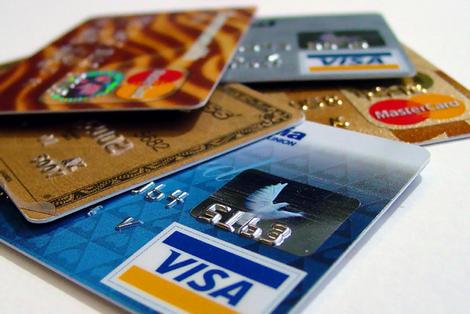
This Consumerist article helps lay out the pros and cons of
buying on credit, and what to do if yours is already so bad you can't even get
a credit card. Which is pretty damn bad.
Before you sign up for anything though, read this WSJ article so you know who
to avoid. (I'll give you a hint: Citigroup Inc., J.P. Morgan Chase & Co.
and Discover.)
Tuesday, July 27, 2010
Banks, Bail-Outs, and Bogus Bonuses
From Democracy Now!:
Report: Bailed-Out Banks Paid Out $1.6B in Excessive Bonuses
A new government report has accused Goldman Sachs, Bank of America, AIG, JPMorgan Chase and other financial institutions of giving out nearly $1.6 billion in unwarranted bonuses immediately after accepting billions of dollars from the taxpayer-funded bailout. The report will be released today by Kenneth Feinberg, the Obama administration’s special master for executive compensation. While the report criticizes the excessive bonuses, Feinberg has no authority to recoup the $1.6 billion. Meanwhile, Wall Street firms are expected to give out another round of large bonuses this year. Goldman Sachs is on pace to hand out an average of $544,000 per worker in salary and bonuses. At JPMorgan Chase, the average worker will take home $400,000, and at Morgan Stanley, $262,000.
Monday, July 26, 2010
Lebron-onomics

To justify the cash they spent on courting James, some cities even released economic studies that made grand (and at times bizarre) claims as to how much the baller of all ballers could stimulate each city's local economy.
Crain's Chicago Business claimed that Lebron could bring $2 billion to the windy city, and And in this nifty PowerPoint presentation the Knicks (via marketing consultant Interbrand) went to great lengths to project James' potential long-term earnings in New York as compared to other cities.
After the decision, Forbes.com's sports blog broke down the cash consequences that a Lebron-ified team would have had for the Heat, the Cavaliers, and the Knicks, respectively. One of the most interesting points Forbes' Patrick Rishe noted was the difference in ticket prices that was observed for the various teams before and after James' final decision: after Lebron signed, Miami Heat season tickets on the secondary market increased from $3200 to $8200 overnight; meanwhile, Cavs season tickets are now averaging $935, about 1/3 of what they were with LeBron. Most interestingly, the day before the announcement, average Knicks season ticket prices had jumped up 33% just on speculation that LeBron would sign with the Knicks. How bout that New York cockiness?
Thursday, July 22, 2010
The Ultimate Deal
According to The Consumerist, it's a buyer's market for burial plots.
The site's Chris Morran writes:
"Sure, it's maybe a bit morbid to think about buying your cemetery plot now, when you're so young and healthy and, you know, breathing. But burial expenses are, well, expensive; that's why you see all those ads for "life insurance" advertised to old people on daytime TV. So if you're looking now to save a bit of cash for you or your loved ones' eternal resting places, you might want to consider snapping up your patch of ground now.”
Sunday, July 11, 2010
Tax Holidays, Unemployment Extensions, and Small-Biz Write-offs
Which of these ideas to aid recovery sounds best?
Payroll tax holidays:
To stimulate the economy now with no long-term increase in government debt, Congress could temporarily exempt a portion of wages from the Social Security taxes imposed on workers; those exempted wages would not be credited in computing that worker’s future retirement benefits. This way, the Keynesians would get their stimulus, and the deficit hawks could sleep better at night.
This would mean that a 40-year-old earning $50,000 and paying annual Social Security taxes of about $3,000 could see those taxes cut to about $2,000. The added $1,000 in his paycheck, along with similar amounts for other workers, could be a huge stimulus to the economy. Meanwhile, the later (post-retirement) cost of a temporary $1,000 tax cut would be spread over many years, meaning an annual pension reduction of only $100 or less.
Automatic Unemployment Benefit Extensions
In the 1970s, Congress worked on a system which had an automatic trigger built-in: whenever unemployment reached a certain point at a national or a state level, benefits were extended by 13 weeks.
The costs of these benefits were shared by the states, which paid them out of their regular unemployment insurance accounts, and the federal government, which increased taxes by about $8 per worker.
That trigger has ceased to exist, through a series of gradual alterations to the law. Reinstating it would ease the burden on states with high unemployment, and ease the anxiety of the unemployed Americans who now must wait and worry each time congress debates a new extensions.
Tax Write-offs
To get small businesses moving again, we should allow themto speed up the rate at which they can write off depreciating assets.Doing so would save employers money and spur entrepreneurialrisk-taking, without increasing the national debt.
-from the New York Times Opinion Page
Payroll tax holidays:
To stimulate the economy now with no long-term increase in government debt, Congress could temporarily exempt a portion of wages from the Social Security taxes imposed on workers; those exempted wages would not be credited in computing that worker’s future retirement benefits. This way, the Keynesians would get their stimulus, and the deficit hawks could sleep better at night.
This would mean that a 40-year-old earning $50,000 and paying annual Social Security taxes of about $3,000 could see those taxes cut to about $2,000. The added $1,000 in his paycheck, along with similar amounts for other workers, could be a huge stimulus to the economy. Meanwhile, the later (post-retirement) cost of a temporary $1,000 tax cut would be spread over many years, meaning an annual pension reduction of only $100 or less.
Automatic Unemployment Benefit Extensions
In the 1970s, Congress worked on a system which had an automatic trigger built-in: whenever unemployment reached a certain point at a national or a state level, benefits were extended by 13 weeks.
The costs of these benefits were shared by the states, which paid them out of their regular unemployment insurance accounts, and the federal government, which increased taxes by about $8 per worker.
That trigger has ceased to exist, through a series of gradual alterations to the law. Reinstating it would ease the burden on states with high unemployment, and ease the anxiety of the unemployed Americans who now must wait and worry each time congress debates a new extensions.
Tax Write-offs
To get small businesses moving again, we should allow themto speed up the rate at which they can write off depreciating assets.Doing so would save employers money and spur entrepreneurialrisk-taking, without increasing the national debt.
-from the New York Times Opinion Page
Tuesday, July 6, 2010
Don't Hate Us Cause We're Apathetic
Despite facing a job market that could make a bilingual Harvard valedictorian soil her madras pants, a full 41% percent of job seekers this year turned down job offers. That's the same percentage that said "thanks, but no thanks" in 2007, when the economy was booming.
This peculiar statistic has been attributed to the large number of recent college grads who have recently entered the job market, and to the special breed of self-confidence that has flourished among their generation.
This NY Times article blames the strange sense of entitlement among the kids of Gen Y - aka the "why worry?" generation - on "parents who overstoked their self-esteem, teachers who granted undeserved A’s and sports coaches who bestowed trophies on any player who showed up."
But perhaps these well-educated (and, importantly, well-informed) college grads are just no longer willing to settle for the shitty hand their counterparts have played in years past. Maybe they are sick of employers taking advantage of a competitive market to expand the (already obnoxious) phenomenon of unpaid internships beyond part-time, supplemental learning experiences into full-time, full-responsibility, unpaid jobs.
This peculiar statistic has been attributed to the large number of recent college grads who have recently entered the job market, and to the special breed of self-confidence that has flourished among their generation.
This NY Times article blames the strange sense of entitlement among the kids of Gen Y - aka the "why worry?" generation - on "parents who overstoked their self-esteem, teachers who granted undeserved A’s and sports coaches who bestowed trophies on any player who showed up."
But perhaps these well-educated (and, importantly, well-informed) college grads are just no longer willing to settle for the shitty hand their counterparts have played in years past. Maybe they are sick of employers taking advantage of a competitive market to expand the (already obnoxious) phenomenon of unpaid internships beyond part-time, supplemental learning experiences into full-time, full-responsibility, unpaid jobs.
I say right on, Gen Y. You may be hyperactive and cocky, but you sure know how to stick it to the man.
Flat is the New Up
In this year's slow but sure economic recovery, the average profit for merger and acquisition deals is a big fat zero. But that flat line is a welcome sight when compared to the slower relative recoveries of the last two recessions.
As to why these deals aren't yet posting profits, this New York Times article explains:
"The trouble is that even though the United States economy has stopped contracting, big risks still weigh on the animal spirits of executives. Job growth is anemic and credit markets have had renewed volatility in the wake of Europe’s sovereign debt crisis. Such market turmoil may have played a role in scuttling Prudential’s bid for the American International Group’s Asian insurance business, and a $15 billion leveraged buyout of Fidelity National Information Services."
Tuesday, May 25, 2010
@mikebloomberg: chill with the tweeting
The City of New York is hiring, in a big way. While that is good news for the ranks of the unemployed, it may be bad news for the City itself. That's because the hiring is concentrated on the "exciting" and "forward-thinking" fields of social media and digital communications. And if past examples count for anything, New York just can't afford to go there right now.
Remember the story Juan Gonzalez broke on CityTime, the admitted disaster of a computer project for which the city pays some 230 consultants an average salary of $400,000 a year to manage, despite it being seven years behind schedule and is hundreds of millions of dollars over budget? Yeah.
As just one element of this new project, Mayor Bloomberg will roll out his own social media arsenal consisting of Facebook and MySpace pages, a YouTube channel, and a Twitter feed.
I'm all for creating jobs, but this seems like it could be more like the most pricey bid for status points in the history of cool.
Remember the story Juan Gonzalez broke on CityTime, the admitted disaster of a computer project for which the city pays some 230 consultants an average salary of $400,000 a year to manage, despite it being seven years behind schedule and is hundreds of millions of dollars over budget? Yeah.
As just one element of this new project, Mayor Bloomberg will roll out his own social media arsenal consisting of Facebook and MySpace pages, a YouTube channel, and a Twitter feed.
I'm all for creating jobs, but this seems like it could be more like the most pricey bid for status points in the history of cool.
Friday, May 21, 2010
This Is A Beautiful Thing
Laid Off Mondays
free tequila shot with proof of unemployment, no cover / 12am

Put all your belongings in a polka-dot handkerchief, then tie it to a broom-handle. Then make your way here and show off your poverty, for a prize. It's like the Depression, except with the added vagaries of global warming-era weather patterns.


Tuesday, May 11, 2010
Schooling in a Slump
During the Great Depression, the high school graduation rate in the U.S.
Not surprisingly, the recession has sparked a similar phenomenon, but in higher education. The Bureau of Labor Statistics recently reported that the share of new high-school graduates enrolled in college rose to 70.1 percent last fall. That was up from 67.2 percent in 2007 and a new record. What's more, a 2009 study by the Pew Research Center
The problem is, college enrollment has actually been rising for the past few decades, with no such increase increase in actual graduations. Apparently, we're great at getting our kids to college, but we kinda suck at keeping them there.
Taylor Momse
Taylor Momse
Friday, April 16, 2010
The Good Ship Matrimony
It's brilliant.
You get a romantic sea breeze during your vows, free booze and food, and the chance to pretend you're a pirate, and your guests have to pay their own way!
 Cruises have long been popular with honeymooners looking for a romantic getaway after the wedding. Now, a growing number of brides and grooms are tying the knot on cruise ships and sailing off into the sunset with their entire wedding party in tow.
All this, for the minor sacrifice of bringing your entire family along on your honeymoon.
You get a romantic sea breeze during your vows, free booze and food, and the chance to pretend you're a pirate, and your guests have to pay their own way!

 Cruises have long been popular with honeymooners looking for a romantic getaway after the wedding. Now, a growing number of brides and grooms are tying the knot on cruise ships and sailing off into the sunset with their entire wedding party in tow.
Subscribe to:
Posts (Atom)