The U.S. political system has a long and noble tradition of catering almost exclusively to those who can front a big wad of cash for their campaigns - between 2000 and 2009, candidates spent $925.1 million on their own campaigns, according to the National Institute on Money in State Politics - and this year's election circuit saw an especially high number of country clubbin' candidates paying their own way.
But during this recession, there's been a glitch in the matrix. Even though these candidates are loaded, they've gotten to talking all Huey Lewis-like. The current populist cravings of the public have led to some particularly bizarre behavior from these candidates. And by bizarre, I mean laughably hypocritical.
The New York Times noted that Jeff Greene, in an appearance last month in Miami, "arrived in a Cadillac Escalade S.U.V., before stumping for energy
conservation," told the crowd "that he was “fed up and frustrated” with Washington
while suggesting job-creation ideas previously proposed by Washington
politicians"; and then received "a raucous welcome as an outsider who could turn Florida
around."
While in the past, self-financed candidates have tended to lose (again, see the National
Institute on Money in State Politics), this recent election saw them at a greater advantage. That's largely because the wells of financial support for traditional fund-raising have all but dried up during the recession.
And with the way things are going now, that phenomenon may persist for many elections to come.

Friday, August 27, 2010


Tuesday, August 10, 2010
Outsourcing The Government?
Three months ago, the city of Maywood, California was headed towards bankruptcy. The city's Police Department alone was costing the town more than twice its total annual budget. Now, the town budget has been reduced by half and residents are ... thrilled?
That's because these days the parks are greener, civic space is better used, City Hall is running more smoothly, and violence has decreased. (Common Dreams) All of this (ostensibly) because in June of this year, the Maywood city council decided to contract out every one of the city's public services. The local police department was taken over by members of the LA County Sheriff's Department, the neighboring city of Bell was hired to perform services such as enforcing parking tickets, and so on.
Hearing of these plans, residents were initially quite concerned. As one resident told the New York Times, "Senior citizens were afraid they would be assaulted as they walked down the street. Parents worried the parks would be shut and their children would have nowhere to safely play. Landlords said their tenants had begun suggesting that without city-run services they would no longer feel obliged to pay rent."
Today, approval is high. However, around the country the experiment still inspires controversy: is Maywood's example one of progressive ingenuity, or a betrayal of city employees and the tradition of civic involvement?
That's because these days the parks are greener, civic space is better used, City Hall is running more smoothly, and violence has decreased. (Common Dreams) All of this (ostensibly) because in June of this year, the Maywood city council decided to contract out every one of the city's public services. The local police department was taken over by members of the LA County Sheriff's Department, the neighboring city of Bell was hired to perform services such as enforcing parking tickets, and so on.
Hearing of these plans, residents were initially quite concerned. As one resident told the New York Times, "Senior citizens were afraid they would be assaulted as they walked down the street. Parents worried the parks would be shut and their children would have nowhere to safely play. Landlords said their tenants had begun suggesting that without city-run services they would no longer feel obliged to pay rent."
Today, approval is high. However, around the country the experiment still inspires controversy: is Maywood's example one of progressive ingenuity, or a betrayal of city employees and the tradition of civic involvement?
Saturday, July 31, 2010
Building Good Credit
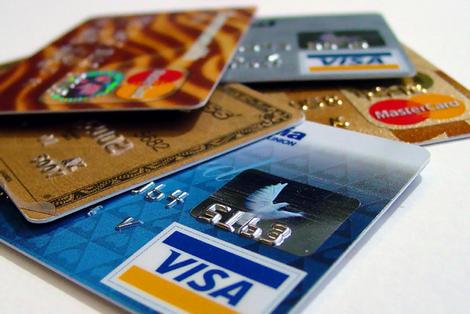

This Consumerist article helps lay out the pros and cons of
buying on credit, and what to do if yours is already so bad you can't even get
a credit card. Which is pretty damn bad.
Before you sign up for anything though, read this WSJ article so you know who
to avoid. (I'll give you a hint: Citigroup Inc., J.P. Morgan Chase & Co.
and Discover.)
Tuesday, July 27, 2010
Banks, Bail-Outs, and Bogus Bonuses
From Democracy Now!:
Report: Bailed-Out Banks Paid Out $1.6B in Excessive Bonuses
A new government report has accused Goldman Sachs, Bank of America, AIG, JPMorgan Chase and other financial institutions of giving out nearly $1.6 billion in unwarranted bonuses immediately after accepting billions of dollars from the taxpayer-funded bailout. The report will be released today by Kenneth Feinberg, the Obama administration’s special master for executive compensation. While the report criticizes the excessive bonuses, Feinberg has no authority to recoup the $1.6 billion. Meanwhile, Wall Street firms are expected to give out another round of large bonuses this year. Goldman Sachs is on pace to hand out an average of $544,000 per worker in salary and bonuses. At JPMorgan Chase, the average worker will take home $400,000, and at Morgan Stanley, $262,000.
Monday, July 26, 2010
Lebron-onomics

To justify the cash they spent on courting James, some cities even released economic studies that made grand (and at times bizarre) claims as to how much the baller of all ballers could stimulate each city's local economy.
Crain's Chicago Business claimed that Lebron could bring $2 billion to the windy city, and And in this nifty PowerPoint presentation the Knicks (via marketing consultant Interbrand) went to great lengths to project James' potential long-term earnings in New York as compared to other cities.
After the decision, Forbes.com's sports blog broke down the cash consequences that a Lebron-ified team would have had for the Heat, the Cavaliers, and the Knicks, respectively. One of the most interesting points Forbes' Patrick Rishe noted was the difference in ticket prices that was observed for the various teams before and after James' final decision: after Lebron signed, Miami Heat season tickets on the secondary market increased from $3200 to $8200 overnight; meanwhile, Cavs season tickets are now averaging $935, about 1/3 of what they were with LeBron. Most interestingly, the day before the announcement, average Knicks season ticket prices had jumped up 33% just on speculation that LeBron would sign with the Knicks. How bout that New York cockiness?
Thursday, July 22, 2010
The Ultimate Deal
According to The Consumerist, it's a buyer's market for burial plots.
The site's Chris Morran writes:
"Sure, it's maybe a bit morbid to think about buying your cemetery plot now, when you're so young and healthy and, you know, breathing. But burial expenses are, well, expensive; that's why you see all those ads for "life insurance" advertised to old people on daytime TV. So if you're looking now to save a bit of cash for you or your loved ones' eternal resting places, you might want to consider snapping up your patch of ground now.”
Subscribe to:
Posts (Atom)